
Running a business comes with many responsibilities, and one of the most important is handling employment taxes properly. For employers, the IRS has established a series of forms in the “99X” family—Form 940, Form 941, Form 943, Form 944, and Form 945—that cover different employment tax situations. Collectively, these are often referred to as the 99X forms. Here’s what you need to know about them.
What Are the 99X Forms?
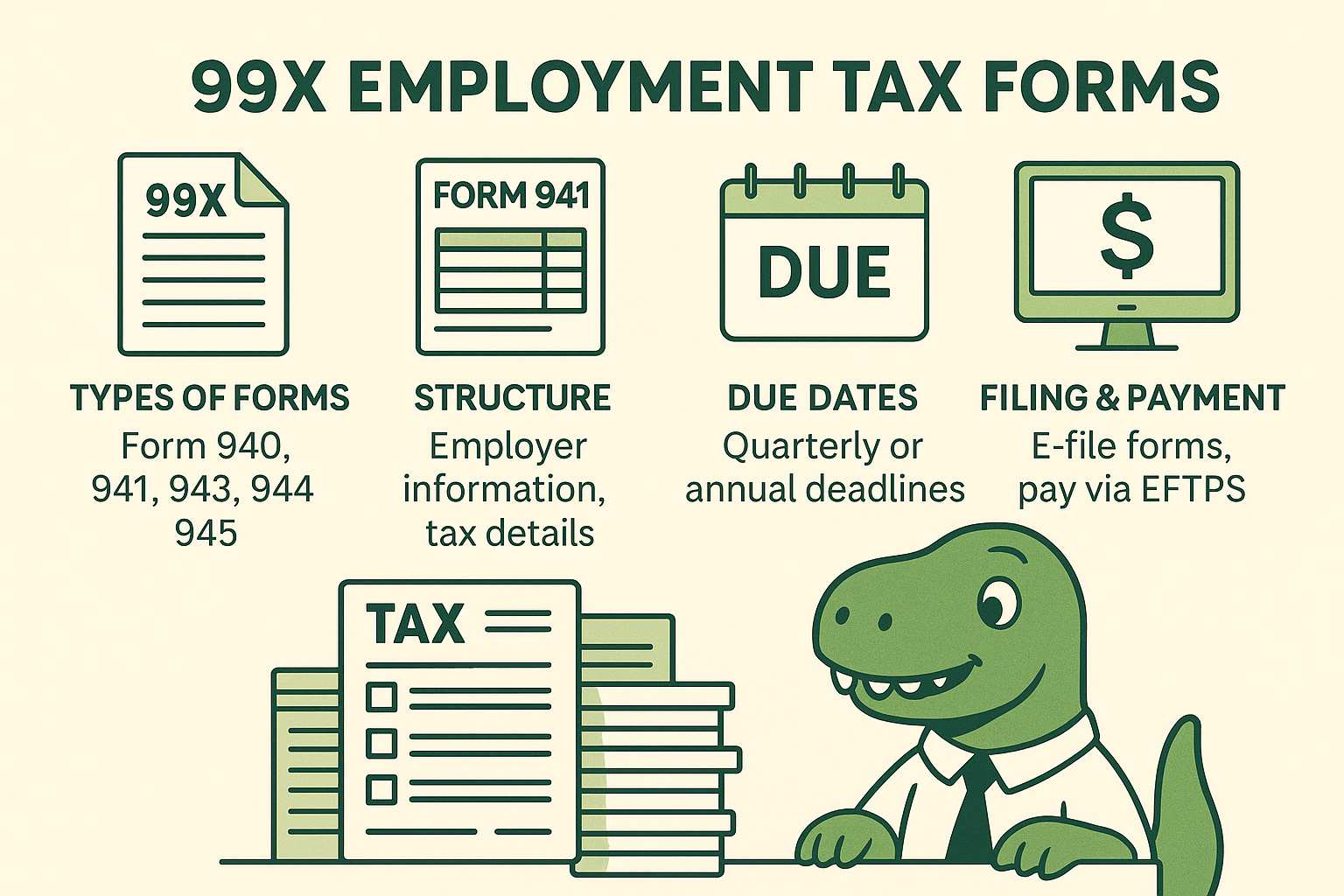
The 99X series are federal employment tax returns that employers must file to report and pay specific employment-related taxes. Each form serves a different purpose:
- Form 940 – Annual Federal Unemployment (FUTA) Tax Return
- Form 941 – Employer’s Quarterly Federal Tax Return (reports federal income tax withheld, Social Security, and Medicare taxes)
- Form 943 – Employer’s Annual Tax Return for Agricultural Employees
- Form 944 – Employer’s Annual Federal Tax Return (for certain small employers in place of Form 941)
- Form 945 – Annual Return of Withheld Federal Income Tax (for non-payroll payments like pensions or gambling winnings)
How Are the Forms Structured?
While each form is slightly different, most follow a similar pattern:
- Employer Information – Name, EIN, and business details.
- Tax Reporting – Wages paid, taxes withheld, FUTA contributions, etc.
- Adjustments – Corrections for prior quarters, sick pay, or other adjustments.
- Tax Liability & Deposits – Total amount owed vs. amounts already deposited.
- Signatures & Certification – Employer or authorized agent signs and certifies.
This consistent structure helps employers navigate the forms without starting from scratch every time.
When Are the 99X Forms Due?
Deadlines vary depending on the form:
- Form 940 – January 31st (annually, for the prior year).
- Form 941 – Last day of the month following the end of each quarter (April 30, July 31, October 31, January 31).
- Form 943 – January 31st (annually).
- Form 944 – January 31st (annually, if you qualify to file instead of Form 941).
- Form 945 – January 31st (annually).
If you deposit taxes on time, the due date may be extended to February 10 for annual forms.
How to Submit the Forms
The IRS provides several methods for filing:
- E-File – The IRS strongly encourages electronic filing through authorized providers or payroll software.
- Paper Filing – Forms can be mailed, though processing times are slower.
- Payment Methods – Employment taxes must be paid via the Electronic Federal Tax Payment System (EFTPS), not by mailing checks with the form.
Why Accuracy Matters
Incorrect or late filings can result in penalties and interest. The IRS takes employment tax compliance seriously, and mistakes—such as underreporting wages or failing to deposit taxes—can create significant problems for a business.
Using a tax professional, like Dino Tax Co, ensures your 99X forms are filed accurately and on time, keeping your business in good standing with the IRS.
✅ Takeaway: The 99X forms are the backbone of federal employment tax reporting. Understanding which forms apply to your business, knowing the due dates, and filing correctly are essential steps to keeping your business compliant.
At Dino Tax Co, we help clients navigate tax matters ranging from unfiled returns to IRS letters and levies and everything in between with clarity and confidence. If you’d like guidance on your situation, schedule a consultation today. Call or text (713) 397-4678 or email davie@dinotaxco.com. We’re here to help you take the next step.

Leave A Comment