
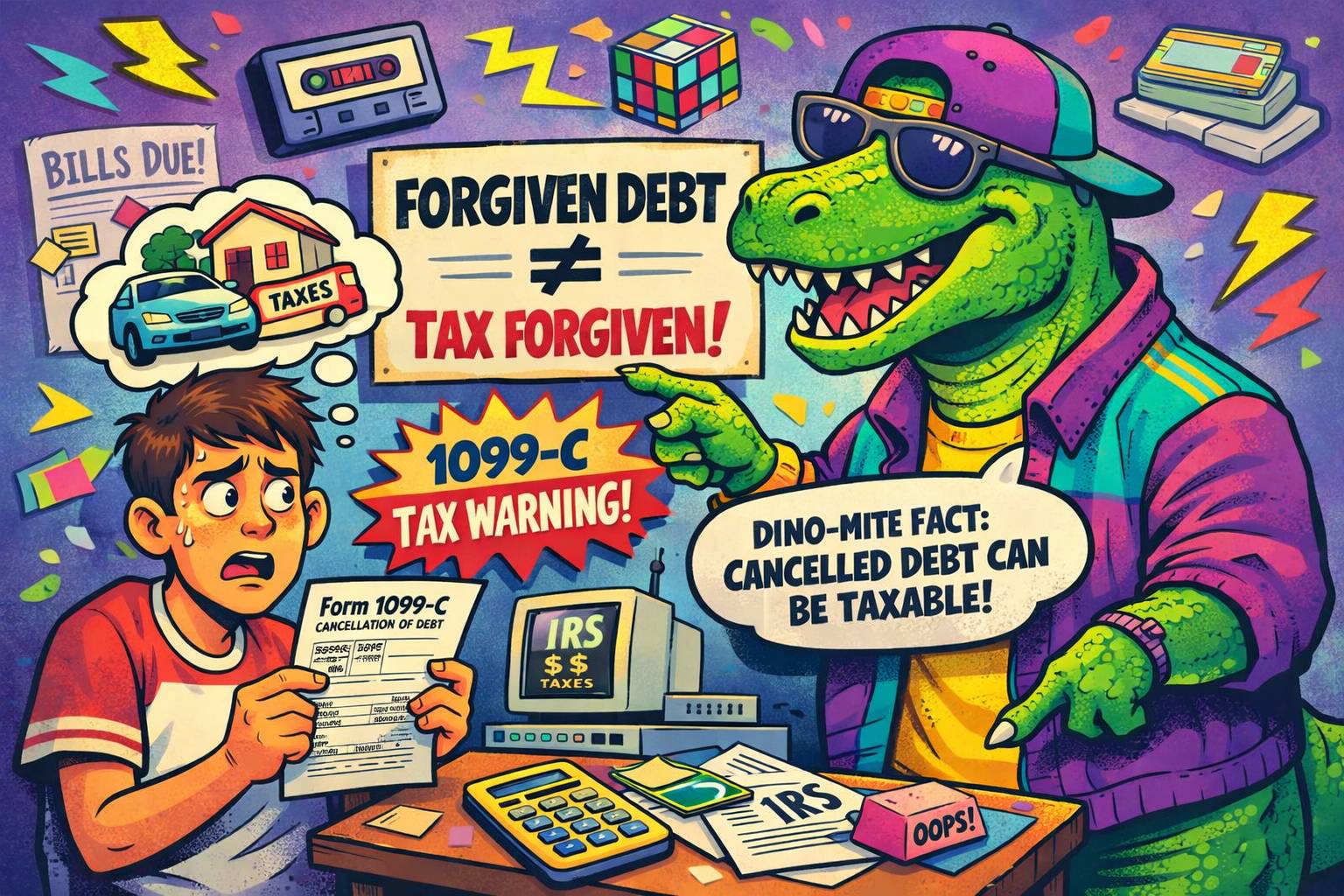
Many taxpayers are shocked to learn that forgiven debt can be taxable income, even when no cash ever hits their bank account. If you received Form 1099-C, or a creditor told you that a debt was “written off,” the IRS may still expect you to report it.
This article explains how canceled debt is taxed, when it isn’t taxable, and what to do if you ignored a 1099-C in a prior year.
Why Forgiven Debt Is Usually Taxable Income
Under federal tax law, when a lender cancels or forgives a debt, the IRS generally treats that cancellation as taxable income.
Why?
Because when you borrowed the money originally, you received it tax-free on the promise you would repay it. If repayment is no longer required, the IRS views the cancellation as an economic benefit — even though it feels counterintuitive.
This concept is known as Cancellation of Debt (COD) income.
What Is Form 1099-C?
When a lender cancels a debt of $600 or more, it is generally required to issue Form 1099-C, Cancellation of Debt, to both you and the Internal Revenue Service.
Common situations that trigger a 1099-C include:
- Credit card charge-offs
- Settled credit card balances
- Foreclosed or repossessed property
- Certain loan modifications
- Abandoned debt after long nonpayment
Once the IRS receives a 1099-C, it expects to see that income reported — unless an exclusion applies.
Forgiven Debt Outside Bankruptcy: Where Problems Arise
Many people correctly assume that debt discharged in bankruptcy is not taxable. That’s true.
The problem arises when debt is forgiven outside bankruptcy, such as through:
- Informal settlements
- Debt management companies
- Charge-offs without court proceedings
- Voluntary creditor forgiveness
In these situations, forgiven debt is taxable by default, unless you qualify for a specific exclusion.
The Insolvency Exclusion (Often Missed)
One of the most important — and most misunderstood — exclusions is insolvency.
You may exclude forgiven debt from income to the extent you were insolvent immediately before the debt was canceled.
What Does “Insolvent” Mean?
You are insolvent when:
Your total liabilities exceed your total assets
This includes:
- All debts (even those not in collections)
- All assets at fair market value (including retirement accounts, vehicles, and real estate)
Importantly:
- Insolvency does not mean “low income”
- Insolvency does not require bankruptcy
- Insolvency must be calculated, not assumed
This exclusion is claimed using IRS Form 982.
Common 1099-C Mistakes That Trigger IRS Notices
Some of the most frequent problems we see include:
- Ignoring the 1099-C entirely
- Assuming forgiven debt is never taxable
- Claiming insolvency without documentation
- Excluding the full debt when only partially insolvent
- Confusing charge-offs with forgiveness
Because the IRS receives the 1099-C directly, these mistakes often result in automated notices, tax increases, penalties, and interest.
When Forgiven Debt Is Not Taxable
Canceled debt may be excluded from income if it falls under one of these categories:
- Debt discharged in bankruptcy
- Insolvency (to the extent of insolvency)
- Qualified principal residence indebtedness (limited circumstances)
- Certain student loan forgiveness programs
- Certain farm or business real property debt
Each exclusion has specific rules, and improper reporting can cause more harm than good.
What If You Ignored a 1099-C in a Prior Year?
If you failed to report canceled debt in a prior tax year, options may include:
- Filing an amended return
- Submitting Form 982 retroactively
- Responding to an IRS notice with proper exclusions
- Resolving the issue through installment agreements or other IRS programs
The correct solution depends on timing, documentation, and IRS posture.
How Forgiven Debt Affects IRS Payment Plans
Ironically, forgiven debt can increase your tax liability, even though it improves your cash flow.
This matters because:
- COD income can disqualify you from certain IRS relief options
- Higher income affects installment plans and Offers in Compromise
- Improper handling can delay resolution for years
Understanding the tax treatment before settling debt is often the difference between relief and a new problem.
Final Thoughts
Forgiven debt is one of the most misunderstood areas of tax law. While relief from creditors feels like a financial win, the tax consequences can be severe if handled incorrectly.
If you received Form 1099-C, settled debt, or believe forgiven debt was wrongly taxed, professional guidance can prevent unnecessary penalties and long-term IRS issues.
At Dino Tax Co, we help clients navigate tax matters ranging from unfiled returns to IRS letters and levies and everything in between with clarity and confidence. If you’d like guidance on your situation, schedule a consultation today. Call or text (713) 397-4678 or email davie@dinotaxco.com. We’re here to help you take the next step.
This article is for general informational purposes only and does not constitute legal or tax advice.

Leave A Comment