
One of the most common and frightening misconceptions taxpayers have is this:
“If the money went into my bank account, it must be taxable.”
That is not true.
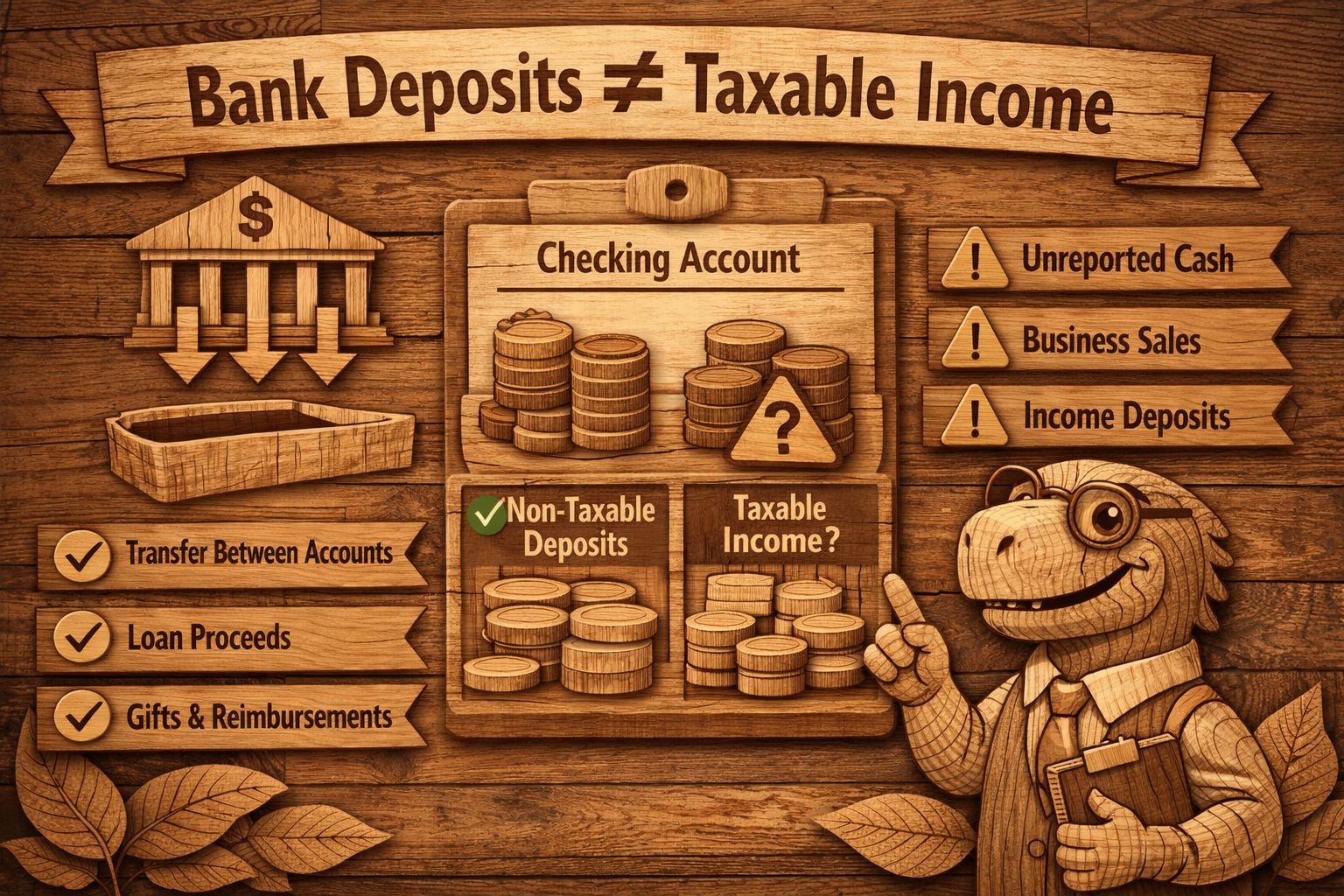
While bank deposits can be evidence of income, not every deposit is taxable, and the IRS knows this. Problems arise when the IRS uses a tool called the bank deposit method and taxpayers do not understand how it works—or how to push back.
This article explains what the bank deposit method is, when the IRS uses it, and why gross bank deposits do not automatically equal taxable income.
What Is the IRS Bank Deposit Method?
The bank deposit method is an indirect way the IRS estimates income when it believes a taxpayer’s records are incomplete, inaccurate, or unreliable.
In simple terms, the IRS:
- Adds up all deposits made into your bank accounts during the year
- Subtracts deposits it can clearly identify as non-income
- Treats the remaining amount as taxable income
This method is most commonly used in:
- Audits of self-employed individuals
- Cash or service-based businesses
- Situations involving commingled personal and business accounts
- Cases involving alleged unreported income
Importantly, the bank deposit method is not conclusive. It is only a starting point.
Bank Deposits That Are Commonly Not Taxable
Many perfectly legitimate, non-taxable transactions still pass through bank accounts. Examples include:
- Transfers between your own accounts
- Loan proceeds
- Gifts from family or friends
- Inheritances
- Refunds or reimbursements
- Credit card advances
- Returned capital or owner contributions
- Repayment of money you previously loaned
- Sale of personal property at a loss
None of these are income — even though they show up as deposits.
The IRS is required to exclude non-income deposits once they are properly identified and documented.
Why the IRS Often Overstates Income Using Deposits
The IRS does not automatically know the source of your deposits. When records are missing or poorly organized, the IRS may assume deposits are income simply because it cannot tell otherwise.
This leads to common problems such as:
- Counting transfers twice
- Treating loans as revenue
- Including personal reimbursements as income
- Mischaracterizing gifts as business receipts
This is why documentation and reconstruction matter.
How Taxpayers Push Back Against the Bank Deposit Method
Taxpayers are allowed — and expected — to rebut the IRS’s assumptions.
This typically involves:
- Tracing deposits to known non-taxable sources
- Reconstructing income using bank statements, invoices, and third-party records
- Explaining cash flow patterns
- Demonstrating personal vs. business activity
- Correcting mathematical or classification errors
In many cases, significant portions of proposed “income” are removed once deposits are properly explained.
Digital Payments and the Bank Deposit Method
Apps like Venmo, Zelle, Cash App, and PayPal have increased confusion.
Not all digital payments are taxable:
- Splitting rent or utilities
- Being reimbursed by friends
- Moving money between accounts
- Personal gifts
The IRS does not tax platforms — it taxes income. Context matters more than the payment method.
Why Professional Representation Matters
The bank deposit method is deceptively simple but procedurally complex. Once the IRS proposes additional income, the burden shifts to the taxpayer to explain deposits.
Handled incorrectly, this can lead to:
- Inflated tax assessments
- Penalties
- Interest
- Long-term collection issues
Handled correctly, it often results in substantial reductions.
Key Takeaway
Bank deposits are not automatically taxable income.
They are evidence — not conclusions.
If the IRS is questioning your deposits, the solution is not panic. It is proper analysis, documentation, and presentation.
At Dino Tax Co, we help clients navigate tax matters ranging from unfiled returns to IRS letters and levies and everything in between with clarity and confidence. If you’d like guidance on your situation, schedule a consultation today. Call or text (713) 397-4678 or email davie@dinotaxco.com. We’re here to help you take the next step.

Leave A Comment