
(Publication 946)
It’s called “special” for a reason
If you’ve ever wondered why depreciation seems to have multiple layers, you’re not wrong. In addition to regular MACRS depreciation and Section 179 expensing, the IRS gives taxpayers another powerful tool: the Special Depreciation Allowance—more commonly known as bonus depreciation.
This allowance is “special” because it lets you deduct a large portion of an asset’s cost immediately, often before regular depreciation even begins. Used correctly, it can dramatically reduce taxable income in the year an asset is placed in service.
Let’s break it down.
What Is the Special Depreciation Allowance?
The special depreciation allowance allows a business to take an additional first-year depreciation deduction for qualified property. Unlike standard depreciation, which spreads deductions over many years, this allowance accelerates the deduction into the first year.
As explained in IRS Publication 946, this deduction is taken after any Section 179 expense election (if used), but before regular MACRS depreciation is calculated.
In practical terms, it’s a turbo-charged front-end deduction.
How Is It Different from Section 179?
This is where taxpayers (and even some preparers) get tripped up.
| Section 179 | Special Depreciation Allowance |
| Optional election | Automatic unless you opt out |
| Subject to income limits | No income limitation |
| Dollar caps apply | No dollar cap |
| Limited to certain property | Broader eligibility |
| Can be strategically limited | Can be elected out by class |
In short: Section 179 is elective and strategic, while bonus depreciation is automatic and aggressive unless you say otherwise.
What Property Qualifies?
Generally, the following may qualify:
- MACRS property with a recovery period of 20 years or less
- Certain computer software
- Qualified improvement property (QBI/QIP) under the correct conditions
- Used property (if acquired in a qualifying transaction)
The key requirement is that the property must be placed in service during the applicable tax year and used in a trade or business.
How Much Can You Deduct?
This is where timing matters.
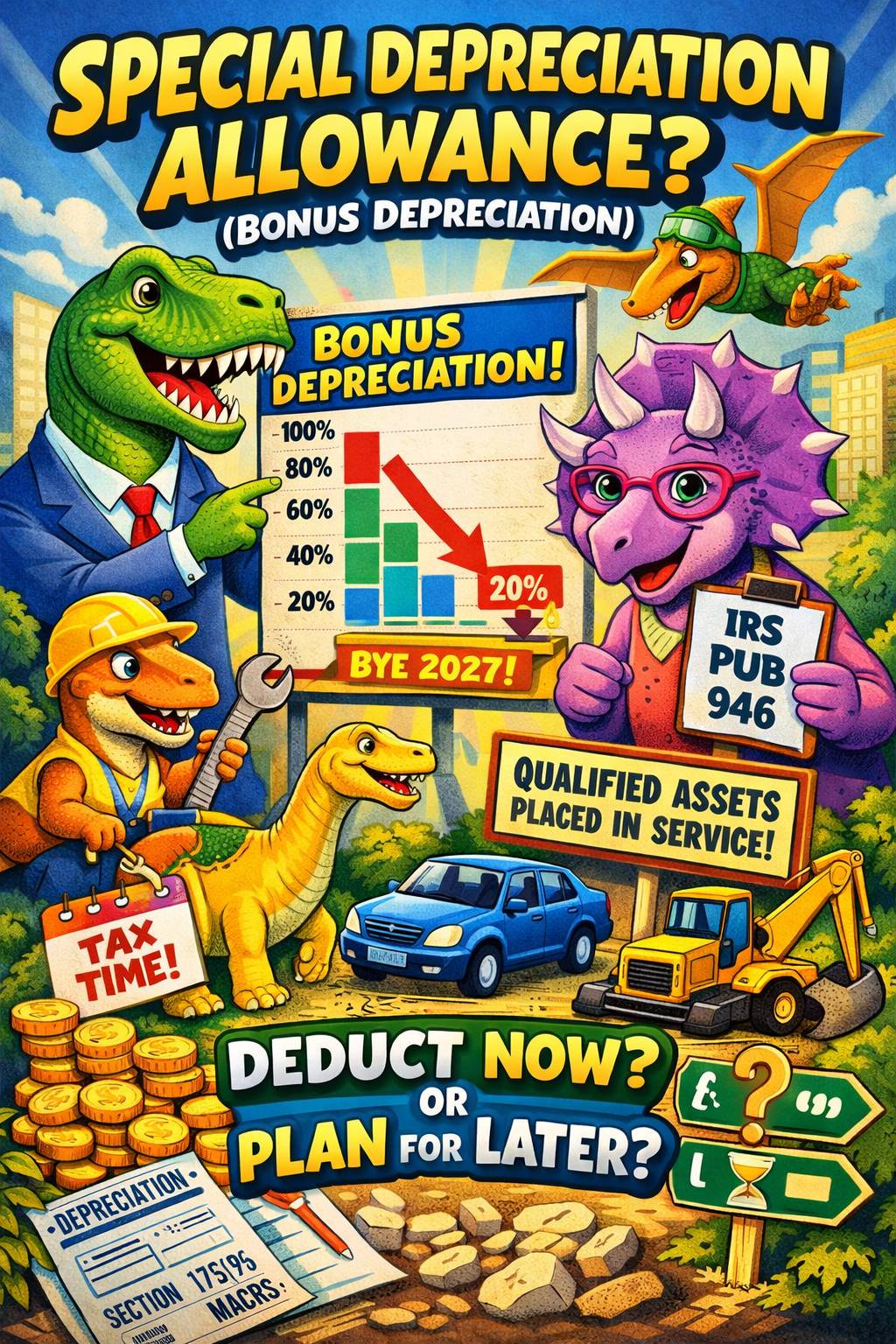
Under recent law changes, the special depreciation allowance has been phasing down:
- 2022: 100%
- 2023: 80%
- 2024: 60%
- 2025: 40%
- 2026: 20%
- 2027+: Eliminated (absent new legislation)
That means the same asset purchased one year earlier could produce a significantly larger deduction.
Planning matters.
Why This Deduction Is “Special”
Three reasons:
- No income limitation
You can create or increase a loss. - Automatic unless you opt out
Many taxpayers don’t realize they’re using it. - Stacks with other depreciation strategies
Section 179 → Bonus → MACRS
(In that order.)
This makes it especially powerful for growing businesses, capital-intensive operations, and taxpayers with uneven income year-to-year.
When Might You Not Want It?
Sometimes faster isn’t better.
You may want to opt out of bonus depreciation if:
- You expect higher income in future years
- You want to smooth taxable income
- You’re planning for credit eligibility or financing optics
- You’re coordinating depreciation with net operating losses
This is where tax preparation becomes tax planning.
Final Thoughts
The special depreciation allowance is one of the most impactful — and misunderstood — deductions in the tax code. It rewards investment, accelerates cash-flow benefits, and can significantly alter your tax outcome if used intentionally.
But like anything “special,” it should be used on purpose, not by accident.
If you’re acquiring equipment, vehicles, or business assets, it’s worth asking whether bonus depreciation helps you now — or whether preserving deductions for later makes more sense.
At Dino Tax Co, we help clients navigate tax matters ranging from unfiled returns to IRS letters and levies and everything in between with clarity and confidence. If you’d like guidance on your situation, schedule a consultation today. Call or text (713) 397-4678 or email davie@dinotaxco.com. We’re here to help you take the next step.

Leave A Comment