
Employers play a central role in the federal tax system. Every paycheck employees receive has income tax withheld, and the IRS provides guidance on exactly how this is done in Publication 15 (Employer’s Tax Guide). If you’re a business owner, payroll manager, or even an employee curious about how your paycheck is calculated, it’s important to understand the different withholding methods recognized by the IRS.
Below, we’ll break down the key withholding methods outlined in Publication 15.
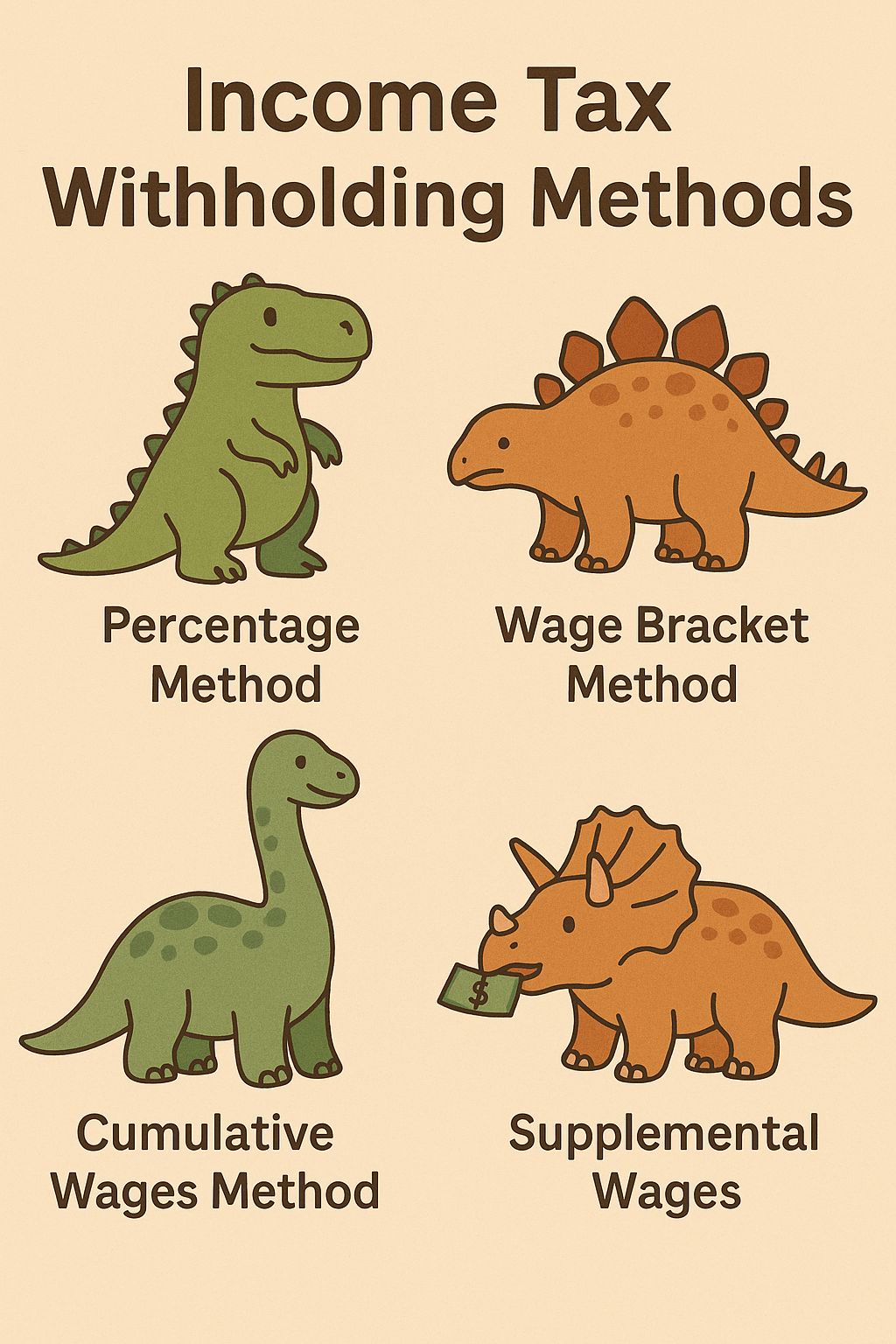
1. Percentage Method
The percentage method is one of the most common approaches to calculating withholding. Employers use IRS tax tables and apply them to an employee’s taxable wages after accounting for pre-tax deductions and adjustments.
- Employers look at the employee’s Form W-4 to determine filing status and any other withholding adjustments.
- Based on IRS charts, a certain percentage of income is withheld depending on income level and pay period.
- This method provides flexibility and is widely used by payroll systems because it can handle any wage amount precisely.
2. Wage Bracket Method
The wage bracket method is designed for simplicity and is most often used for employees earning within standard income ranges.
- Employers refer to IRS wage bracket tables, which list income ranges for each pay period (weekly, biweekly, monthly, etc.).
- By finding the employee’s income and filing status in the table, the employer can directly read the correct withholding amount.
- This method is limited to certain wage ranges, so higher-income earners often default to the percentage method.
3. Alternative Methods
Publication 15 also recognizes some specialized withholding methods, which may apply in unique circumstances:
- Cumulative Wages Method – Used if an employer begins withholding mid-year or after failing to withhold correctly earlier in the year. This ensures proper annualized withholding.
- Supplemental Wages – Bonuses, commissions, or overtime pay may be withheld at a flat rate set by the IRS (currently 22% for most supplemental wages up to $1 million, with higher rates for excess amounts).
- Annualized Method – Employers can project annual wages to estimate withholding, particularly useful for uneven pay periods or seasonal work.
4. Importance of Accurate Withholding
Employers must stay compliant with IRS requirements, as under- or over-withholding can create tax headaches for employees and possible penalties for businesses. Employees can adjust their Form W-4 at any time to better reflect their tax situation, which directly impacts withholding calculations.
Final Thoughts
IRS Publication 15 gives employers the tools they need to correctly calculate and remit income tax withholding. Whether using the percentage method for precision, the wage bracket method for ease, or specialized methods for bonuses and unique pay situations, accuracy is essential.
For business owners, ensuring compliance isn’t just about avoiding penalties—it’s about fostering trust with employees by making sure their paychecks and taxes are handled correctly.
At Dino Tax Co, we help clients navigate tax matters ranging from unfiled returns to IRS letters and levies and everything in between with clarity and confidence. If you’d like guidance on your situation, schedule a consultation today. Call or text (713) 397-4678 or email davie@dinotaxco.com. We’re here to help you take the next step.

Leave A Comment