
Parents often wonder how their children’s income will be taxed. While children generally file their own returns if they earn enough, a special set of rules—commonly known as the “kiddie tax”—may cause part of a child’s unearned income to be taxed at their parents’ higher tax rate.
Earned vs. Unearned Income
- Earned Income: Wages from jobs, babysitting, or other services are taxed at the child’s tax rate.
- Unearned Income: Interest, dividends, capital gains, and similar investment income fall under the kiddie tax rules when certain thresholds are exceeded.
2025 Kiddie Tax Rules & Thresholds
For tax year 2025:
| Portion | Amount | How It’s Taxed |
| First $1,350 of unearned income | Up to $1,350 | Not taxed (standard deduction for dependent child) |
| Next $1,350 of unearned income | $1,350 to $2,700 | Taxed at the child’s marginal rate |
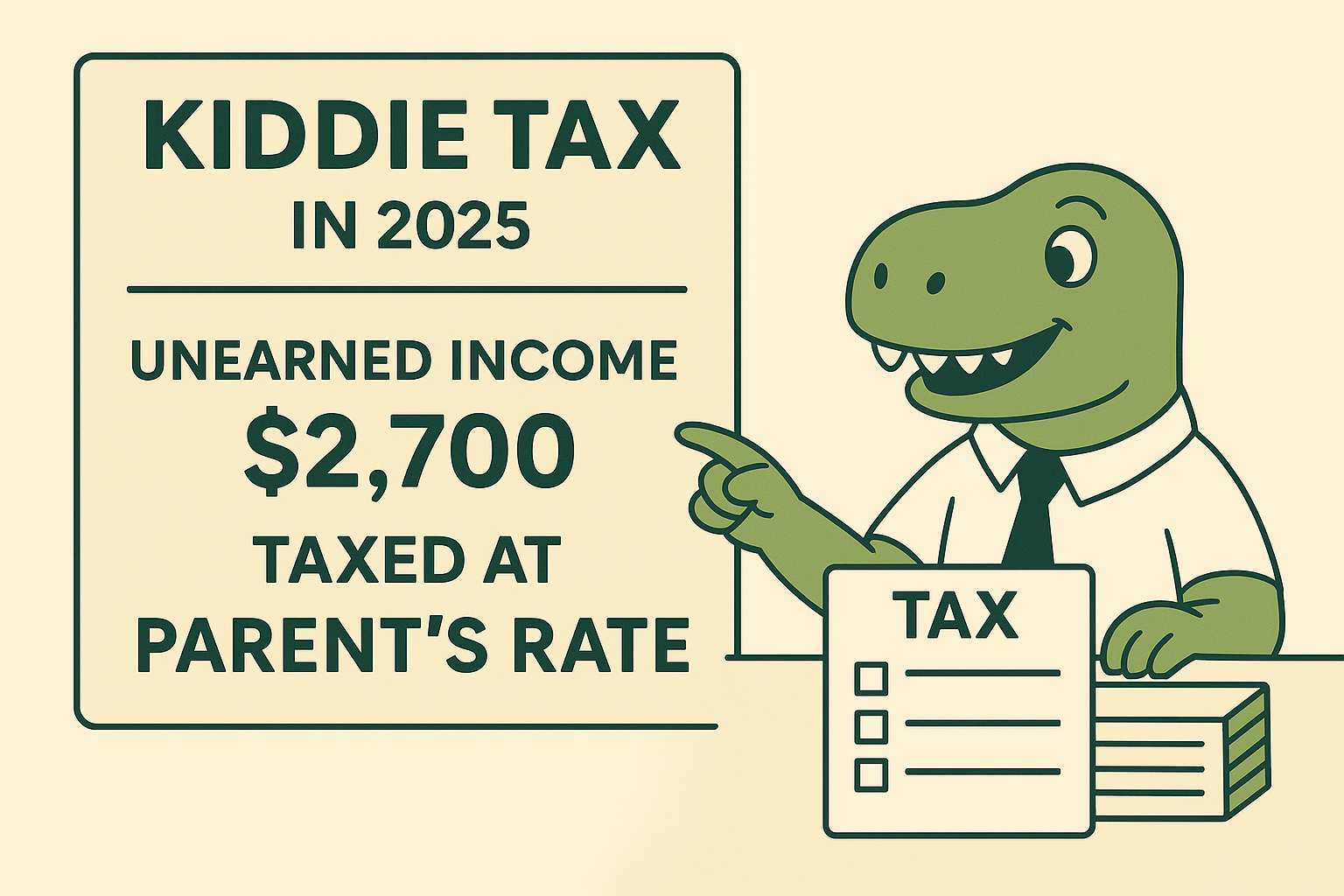
| Any unearned income above $2,700 | Over $2,700 | Taxed at the parent’s marginal tax rate |
Who It Applies To
- Children under age 18 at the end of the tax year
- Full-time students aged 19-23, if they are dependents and do not provide more than half of their own support
What Parents Should Know
- Filing Requirements – If a child’s unearned income exceeds $2,700 in 2025, the child usually must file a tax return and attach Form 8615, “Tax for Certain Children Who Have Unearned Income.”
- Standard Deduction for Dependents – The first portion of unearned income ($1,350 in 2025) is protected by the standard deduction for dependent children.
- Parents’ Election Alternative – If a child only has interest, dividends, or capital gains (i.e. unearned income), and income is below another threshold, parents may be able to report that income on their own return (using IRS Form 8814), though this has trade-offs.
- Planning is Key – Because even modest investment income might trigger the higher rate for the portion above $2,700, families often plan using investment types and vehicles that manage or defer unearned income.
Why This Matters
Failing to anticipate the kiddie tax consequences can lead to surprise tax bills. On the other hand, being aware of the threshold, and knowing how much will be taxed at which rate, gives parents the power to plan more effectively—balancing financial growth for children with tax efficiency.
Closing
At Dino Tax Co, we help clients navigate tax matters ranging from unfiled returns to IRS letters and levies and everything in between with clarity and confidence. If you’d like guidance on your situation, schedule a consultation today. Call or text (713) 397-4678 or email davie@dinotaxco.com. We’re here to help you take the next step.

Leave A Comment