
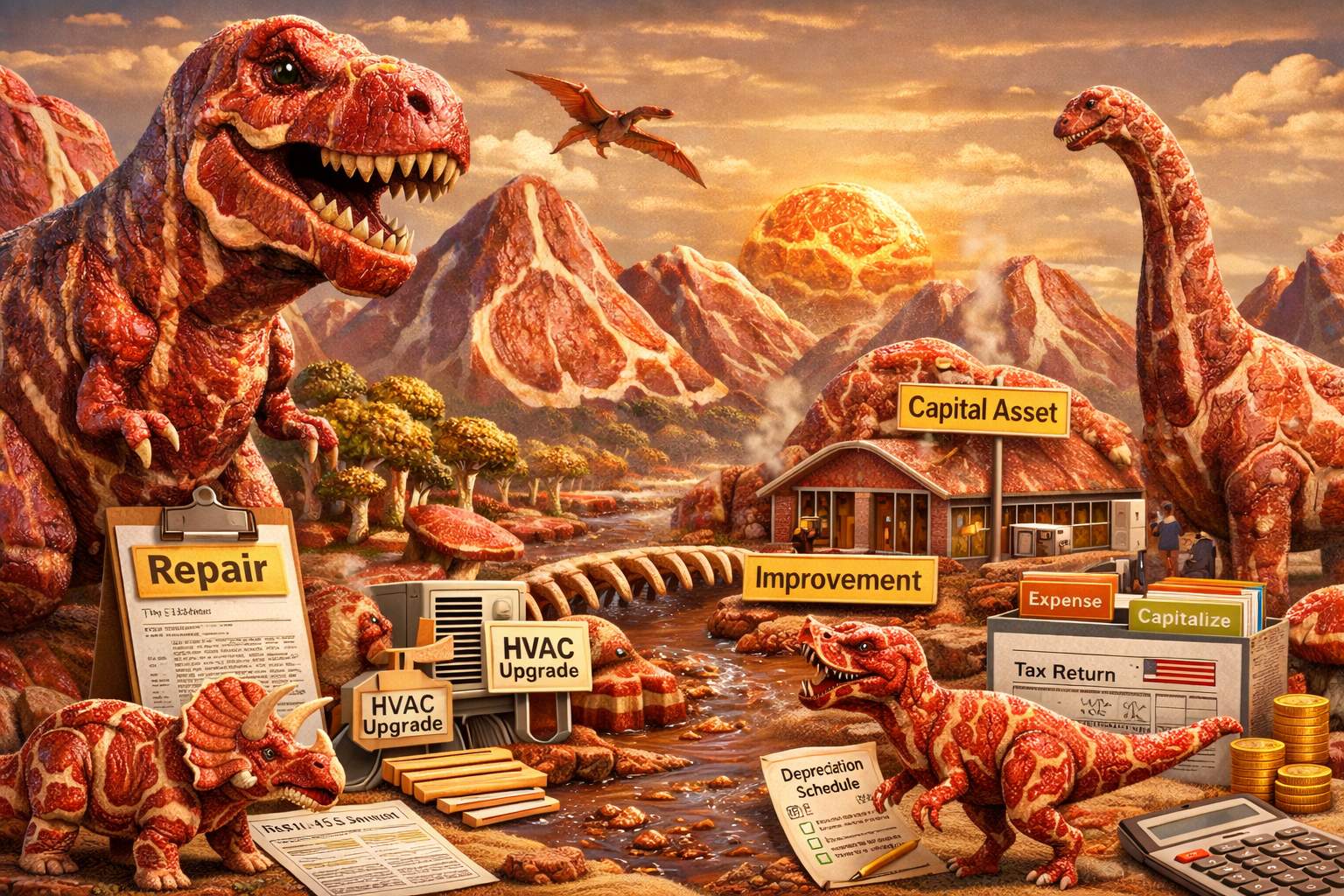
New HVAC motor? Roof patch? Electrical work? The tax treatment depends — and the IRS actually gives us a roadmap.
How to Treat Repairs and Improvements (Publication 946) — You Can Do It
One of the most common — and most misunderstood — tax questions I get is deceptively simple:
“Is this a repair I can deduct now, or an improvement I have to capitalize?”
The good news? The IRS actually gives us a workable framework in IRS Publication 946, and once you understand it, the decision becomes much clearer. You don’t need to be an accountant to get this right — you just need to know what the IRS is really asking.
Let’s break it down.
The Core Question the IRS Cares About
The IRS isn’t focused on how expensive the work was.
They care about what the work actually did.
Ask yourself:
Did this keep the property operating as it already was — or did it make it better, bigger, or longer-lasting?
That single question drives the entire analysis.
When You Can Deduct the Cost (Repairs & Maintenance)
You may deduct the cost in the year paid or incurred if the expense:
- Keeps the property in ordinary, efficient operating condition
- Does not materially add value
- Does not substantially prolong the useful life
- Does not adapt the property to a new or different use
Common deductible repairs include:
- Fixing a leaking pipe
- Replacing broken window glass
- Patching a roof
- Repainting walls
- Repairing HVAC components
- Replacing worn-out parts with comparable parts
These are considered routine maintenance — the IRS views them as the cost of doing business.
When You Must Capitalize the Cost (Improvements)
You must capitalize the expense (and recover it over time through depreciation) if the work results in a betterment, restoration, or adaptation of the property.
A helpful IRS memory tool is B-R-A:
B — Betterment
- Fixes a material defect
- Adds value
- Increases capacity or efficiency
Example: upgrading electrical service to support new equipment
R — Restoration
- Replaces a major component
- Rebuilds the property to like-new condition
- Repairs damage after a casualty
Example: replacing an entire roof or HVAC system
A — Adaptation
- Converts the property to a new or different use
Example: turning a warehouse into office space
If your expense fits any of these categories, capitalization is required.
The “Unit of Property” Rule (Why Details Matter)
The IRS doesn’t always look at a building as a single thing.
Instead, they analyze units of property, such as:
- HVAC systems
- Plumbing systems
- Electrical systems
- Structural components
That means replacing a part of a system may be deductible — but replacing the entire system is usually capitalized.
This is where good records (and good advice) matter.
Safe Harbors That Can Help You
Publication 946 also allows several safe harbors that can make life easier:
- De Minimis Safe Harbor – Small-dollar items may be expensed
- Routine Maintenance Safe Harbor – Expected recurring maintenance may be deducted
- Small Taxpayer Safe Harbor – Special rules for small buildings and taxpayers
Used correctly, these rules can legitimately accelerate deductions — not avoid tax, but time it better.
Why This Matters More Than People Realize
Getting this wrong can mean:
- Lost deductions
- Amended returns
- IRS reclassification on audit
- Penalties and interest
Getting it right can mean:
- Cleaner books
- Better cash flow
- Fewer audit headaches
- Strategic depreciation planning
This is not about being aggressive — it’s about being correct and intentional.
Bottom Line
- Repairs keep things running → deduct now
- Improvements make things better → capitalize and depreciate
- Details matter
- You can do this — especially with the right guidance
If you’re unsure how to classify a particular expense, that uncertainty alone is a good reason to ask before filing. A small conversation now can prevent a large problem later.
At Dino Tax Co, we help clients navigate tax matters ranging from unfiled returns to IRS letters and levies and everything in between with clarity and confidence. If you’d like guidance on your situation, schedule a consultation today. Call or text (713) 397-4678 or email davie@dinotaxco.com. We’re here to help you take the next step.

Leave A Comment